
|
We hope every one of your children feels your love and care each and every day! And we hope that you feel the love of your children and families, too! As we celebrate Valentine's Day at ECS this week, we wanted to share some ideas that help adults and children feel loved and that support emotional well-being and development as well. 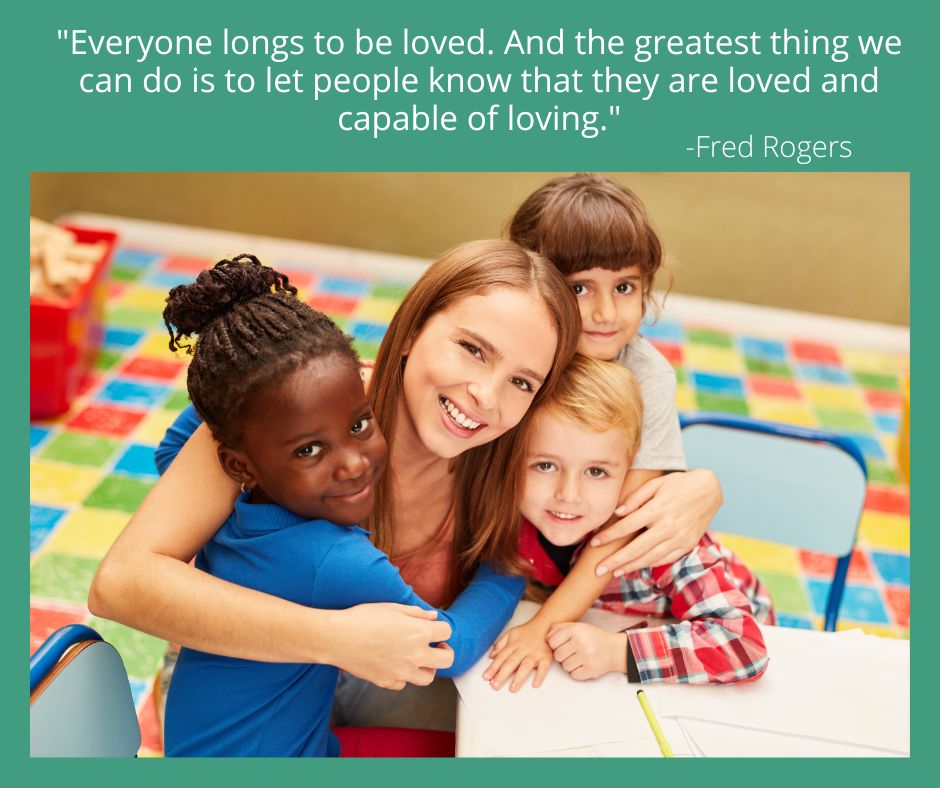 1. Treasure the love!I have often said that one of the nice things about teaching young children is that they still love their teacher! Whether you are a classroom teacher or a daytime caregiver, you are like a second mom or dad! You take care of them for a big part of their day, you make sure they are fed and have things to play with, and you help them learn! Children - and families - know when you value them and will reciprocate by showing their love and trust! Keep those love letters! When you have had a bad day, read those love letters to remind yourself of the impact you have made on a child. To motivate you to help a child realize his/her capacity for love. And keep “love letters” from parents too - those end of the year notes that will remind you of the appreciation of the families you have helped! Whenever you receive little gifts you receive from your children - flowers, drawings, hugs - model appreciation for the person as well as the gift. “I love that you remembered that I like purple!” Expand on the opportunity for positive social and language interactions. Instead of just saying “Thank you, that’s nice!”, engage in conversation. “Tell me about the picture you drew for me.” “What kind of flower is your favorite?” Comment and share your favorite tokens of love from children! 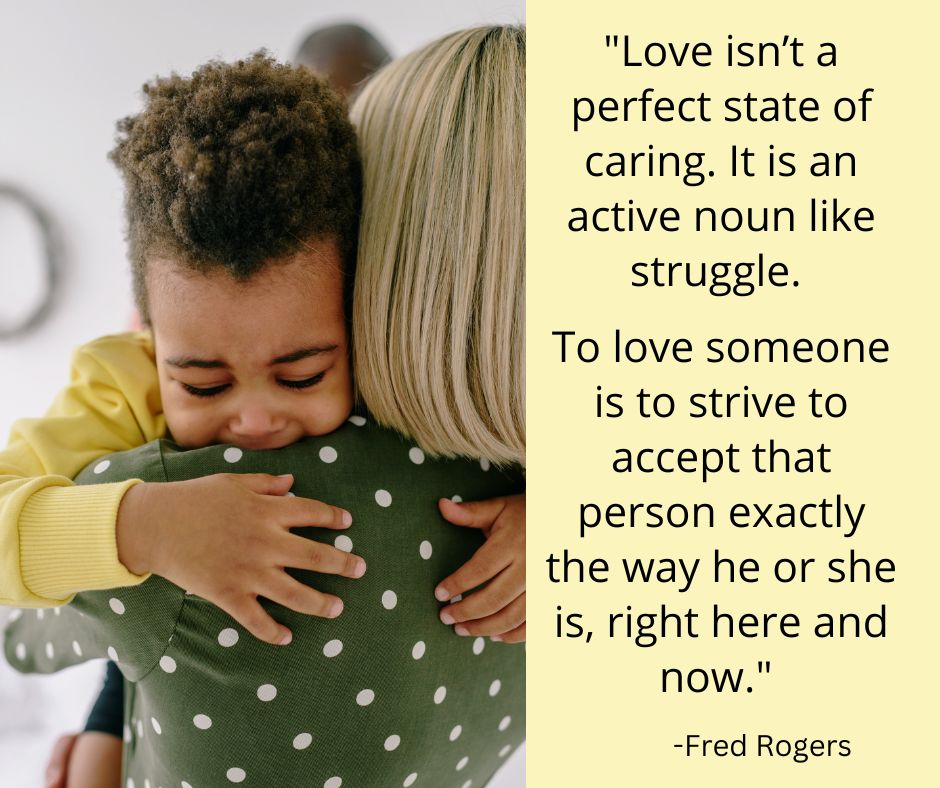 2. Let children know they are loved!Adult-child relationships are crucial to healthy social emotional development - and to learning, behavior and health! Give children positive feedback and interactions that will let them know that they are treasured and appreciated. Show them that they are both loved and capable of loving. On the subject of love, one of our favorite stories to read to children is “How Do I Love You?” by P.K.Hallinan. With simple words and illustrations, it reassures, “I love you on your very best and very worst of days.” It goes on to model phrases we can use everyday, like, “I love to see you smile!” and “I love to watch you play.” Whether in the classroom, or snuggled up with our own children at home, reading it conveys the message of unconditional love. Dr. Gabor Mate’, an expert on trauma, addiction, stress and childhood development, states that, “Love felt by the parent does not automatically translate into love experienced by the child.” We can help communicate our love by sharing stories and expressing heartfelt messages. Time spent reading to and talking with children can strengthen the loving bond and help our children to experience it for themselves. For more ideas on how to express love and strengthen the connections children need to thrive, visit these websites: How do you let the children in your life know that you love them? Comment and share your ideas with us! 3-9 [slideshow]. Use these 7 intentional teaching strategies:We hope you find these ideas helpful as you support your children's emotional development. For information about our own "4 C's Framework of Emotional Support," check out our other blog posts: Besides sharing tips with you, we also want to let you know how much we appreciate you. The loving things you do for your children and families every day are helping to make ECS' vision come true: a more compassionate world where every child is cherished and nurtured. Thank you!! From all of us at ECS, happy Valentine's Day! References & ResourcesBrackett, M. (2019). Permission to Feel. London, England: Quercus Publishing.
Bailey, B. A. (2000). I Love You Rituals. New York City: William Morrow Paperbacks. Kostelnik, M. J., Rupiper, M., Soderman, A. K., & Whiren, A. P. (2014). Developmentally Appropriate Curriculum in Action. Upper Saddle River, NJ: Pearson. Safe Place Breathing Icons. (n.d.) Conscious Discipline. https://consciousdiscipline.com/resources/safe-place-breathing-icons/
0 Comments
Your comment will be posted after it is approved.
Leave a Reply. |
AuthorI'm Diane Goyette, a Child Development Specialist, Trainer, Consultant and Keynote Speaker. I'm excited to share my blog! Archives
August 2023
Categories
All
|
 RSS Feed
|
Ways to Contact Us:
Schedule an Appointment |
|
Follow earlychildhoodspecialties for encouragement, teaching tips and more!
|
Follow eepworm for child-friendly posts!
|
© 2013-2024 Early Childhood Specialties LLC. All rights reserved.