
|
We early childhood educators often say that children learn best through play - but do we really mean it? If we're serious about children learning through play, we will prioritize the opportunities for them to play - both indoors and out! In the classroom, the best way to prioritize playtime is through learning centers - special areas devoted to free choice play. 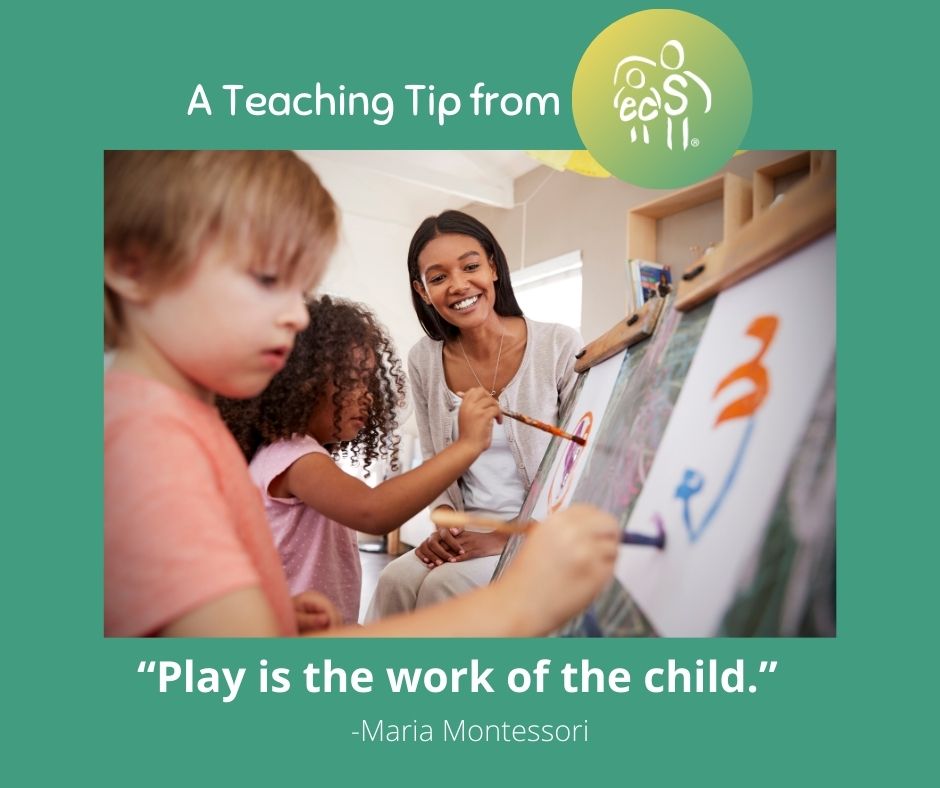 The Importance of PlayPlay is the most powerful learning tool there is! It supports all areas of development:
But don't just take our word for it. Here is an excerpt on play from the position statement on developmentally appropriate practice from the National Association for the Education of Young Children (NAEYC): Play... is the central teaching practice that facilitates young children’s development and learning... You can download the complete position statement here: 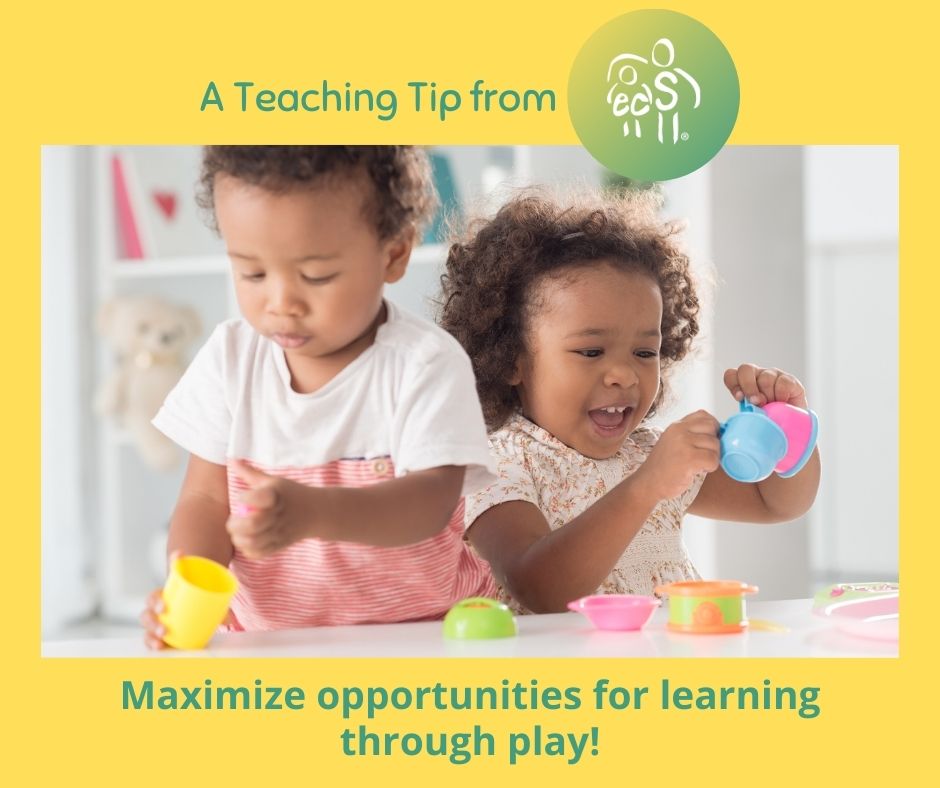 Our learning centers should be providing ideal play opportunities in our early childhood settings. When children are allowed to freely choose and direct their own play, they turn those opportunities into individualized learning experiences. Our role as educators - and parents - is to provide rich, play-based learning environments that encourage the development of knowledge and skills across all domains! Managing Centers to Maximize Play-When planning the number of centers to have in your classroom, a good rule is to provide 1 ½ choices per child. If you have 20 students, you should have 30 possible choices available – that is, places in centers to play . (For example, have 10 center areas where 3 children can play in each area.) Yes, that's a lot of play places! But try to find the largest number of centers that works for your setting, allowing as much child-led choice as possible that still allows for a positive environment for learning and exploration. Easily seen dots on center signs is one way to show how many can play in that center at one time. -Allow children to move freely from one center to another during center time. Simple rules like cleaning up what you took out before you leave an area (unless someone else is still playing with it) and following the rule of how many in a center can make this manageable. It may seem like allowing free-choice movement between centers would be more difficult to manage or cause more challenging behaviors, but the opposite is true. When we let children decide where and when they want to play in a center, they get more immersed in their play and they act out less! Also, you are avoiding too many transitions, which many children find challenging. -Make it easy for children to play independently. Provide storage and display shelves and containers that are easy for children to use on their own. Label shelves and containers with a picture or visual cue showing where things go. Easy storage and clean-up can help children develop self-help skills as well as a positive self-worth and a sense of belonging. -Signal when it is near time to clean-up and have a designated song or clean-up signal when it is time to end centers. You can change the song or signal when the routine needs to be refreshed. In Marjorie’s kindergarten classroom, children were encouraged to bring something they made or did during centers to share (either with a partner or whole group). This sharing time was a great time to practice speaking and listening skills and encourage peer support! -Change centers and materials as children’s interests and abilities change or you want to move to a new theme. Involving children in the set-up leads to more meaningful play in the centers! How Learning Center Play Supports Social Development 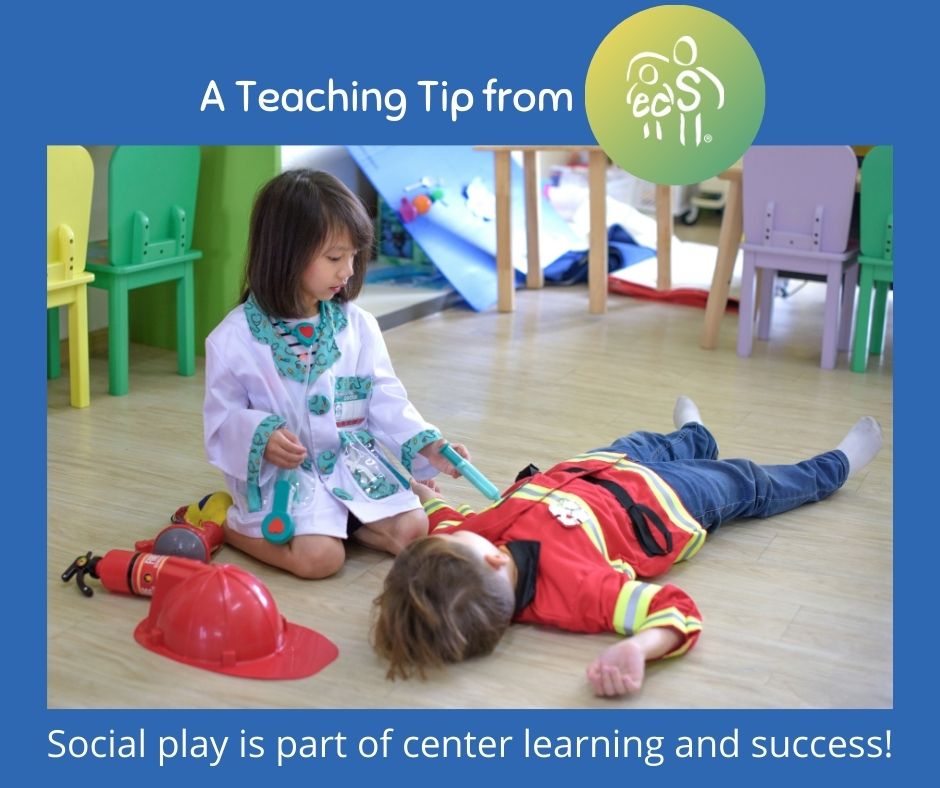 Let's pretend you got hurt fighting the fire and I'm the doctor who helps you." Social development is the gradual gaining of the skills, attitudes, relationships, and behavior that enable children to interact with others. Put more simply, it is learning about others. Social play happens when children are playing together (or with adults). By definition, social skills develop slowly over time - children need lots and lots of practice to learn how to get along with others! In early childhood, play gradually gets more social and more complex. By about age four, children begin to engage in sociodramatic play, cooperating to take on different roles and creating their own rules for how they will play. Sociodramatic play is an especially valuable type of play. Besides having fun (which has value in itself!), children learn social skills that include: communication, cooperation, problem-solving and perspective taking. Research shows that these social skills help children succeed in school and in life, too. For children to best learn social skills through play, they need lots of opportunities to play with other children, of course. But they also need support from sensitive adults. Here’s why: -Young children often do not know what is expected in different social situations -They lack experience and knowledge of appropriate ways to solve conflicts -They are naturally egocentric, so it is hard for them to understand others’ intentions and feelings We can support children’s social skill development by playing with our children and by modeling the positive social behaviors we want them to use. We can also teach them social skills using a technique called “scaffolding” - giving just enough help at first to build new skills, then letting them do more and more on their own. For more on ways to support young children’s development of social skills, see this blog post: We hope these tips help you make free choice play the #1 priority for your children! Comment and share with us your thoughts on play in learning centers. References for a Conversation About Play (from NAEYC)
0 Comments
|
AuthorI'm Diane Goyette, a Child Development Specialist, Trainer, Consultant and Keynote Speaker. I'm excited to share my blog! Archives
August 2023
Categories
All
|
 RSS Feed
|
Ways to Contact Us:
Schedule an Appointment |
|
Follow earlychildhoodspecialties for encouragement, teaching tips and more!
|
Follow eepworm for child-friendly posts!
|
© 2013-2024 Early Childhood Specialties LLC. All rights reserved.